


On-Chain Liquidity and Market Efficiency in the Stablecoin Era
 5 minutes

Stablecoins Reshape On-Chain Liquidity
The advent of fiat-pegged cryptocurrencies (stablecoins) has fundamentally transformed liquidity in crypto markets. Over the past few years, stablecoins have evolved from niche tokens into the backbone of digital asset trading. By mid-2025, stablecoins accounted for roughly one-third of all on-chain transaction volume, reflecting their sweeping adoption as a medium of exchange and store of value in crypto ecosystems. Stablecoin transaction volumes have surged to record highs; for example, aggregate stablecoin volume exceeded $26 trillion in 2024, a figure propelled by their ubiquitous use in trading and decentralised finance (DeFi). The market capitalisation of stablecoins also jumped to over $210 billion by the end of 2024, underscoring rapid growth. Notably, the vast majority (over 90%) of stablecoin flow has been tied to crypto trading activity and DeFi liquidity provision, highlighting that stablecoins primarily serve as the liquidity engine of the crypto economy rather than just payment instruments.
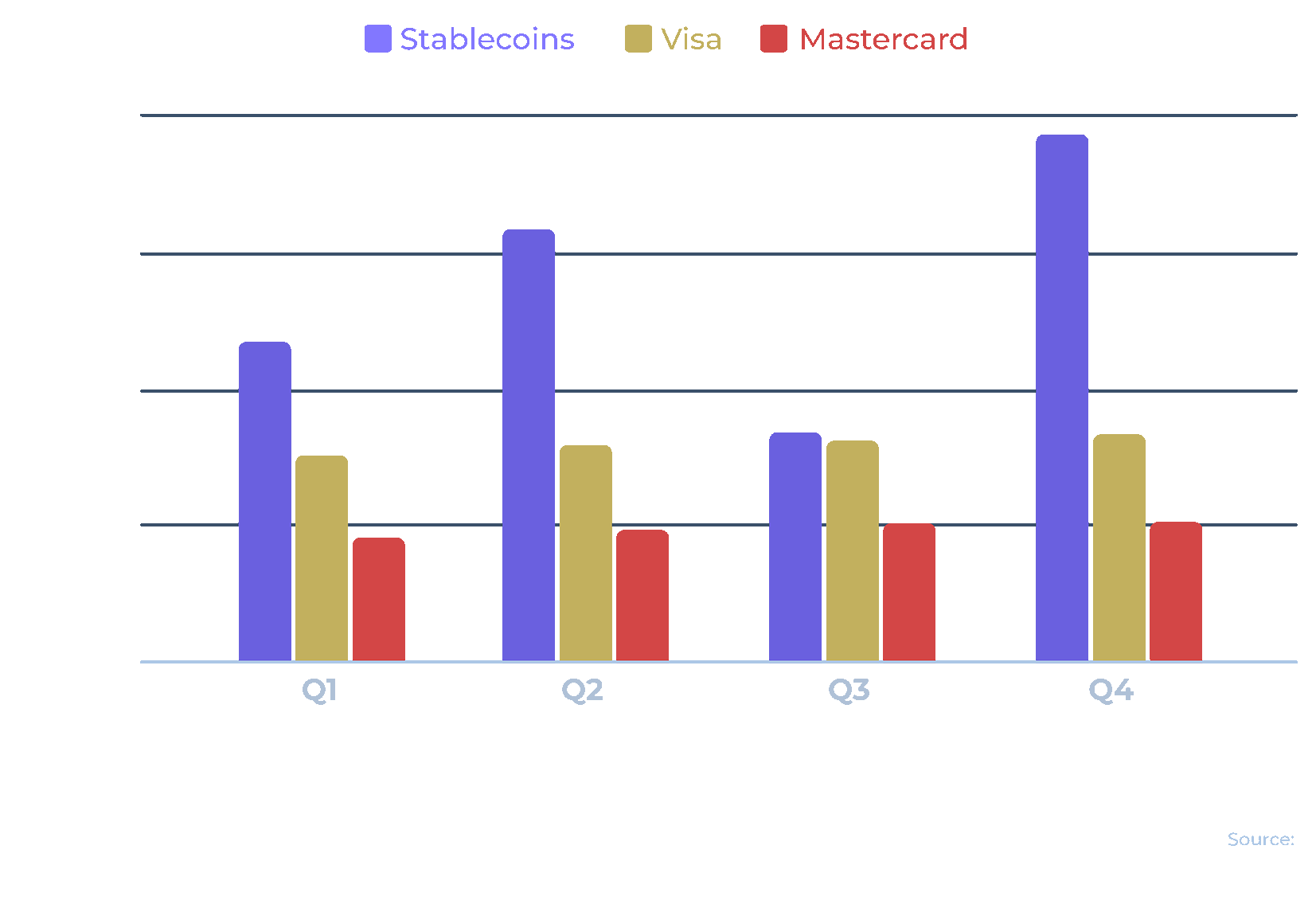
Quarterly Transaction Volume: Stablecoins vs. Visa vs. Mastercard (2024) via CEX.IO. Stablecoin volumes (teal) have begun to rival major payment networks.
This rise of stablecoins has deepened on-chain liquidity in ways previously not possible with traditional fiat. Because stablecoins maintain a (mostly) stable value against fiat currencies, they serve as a convenient quote and base asset for trading pairs across exchanges. On many major exchanges, stablecoin-based trading pairs (e.g. BTC/USDT, ETH/USDC) have in practice replaced fiat pairs as the preferred venues for liquidity. These crypto-to-stablecoin markets tend to have far greater depth and tighter bid-ask spreads than crypto-to-fiat markets. Unlike fiat on-ramps that are constrained by banking hours and intermediaries, stablecoin liquidity is available 24/7 on-chain. For instance, stablecoin markets on large exchanges like Binance exhibit significantly higher market depth for BTC or ETH traded against USDT than against USD or EUR, since stablecoins face none of the settlement delays or compliance frictions of traditional currencies. In essence, stablecoins provide a borderless, always-on liquidity layer that seamlessly connects traders across the globe. Market makers can deploy capital in stablecoin form and move it between platforms almost instantly, enabling them to arbitrage price differences and fill orders much more efficiently than if they relied on transferring fiat cash.
The integration of stablecoins into decentralised exchanges (DEXs) and liquidity pools has further bolstered on-chain liquidity. In DeFi protocols, liquidity pools are often composed of stablecoin pairs or stablecoin-to-crypto pairs, ensuring that traders can swap assets with minimal price impact. Stablecoins’ price stability minimises impermanent loss for liquidity providers and reduces volatility in these pools. By 2025, some on-chain pools (e.g. USDC/ETH on Uniswap) hold hundreds of millions of dollars in liquidity, allowing multi-million-dollar trades with only tiny fractions of a percent in slippage. The presence of deep stablecoin liquidity on DEXs means that large trades can clear on-chain without swinging the market, a sign of maturing efficiency in decentralised markets. Even outside of crypto-to-crypto trading, stablecoins are starting to serve as a bridge to traditional finance use cases. A small but growing share (on the order of 5-10%) of stablecoin volume now represents real-world payments and settlements, such as cross-border remittances, corporate treasury transfers and merchant transactions, indicating their expanding role in broader financial markets.
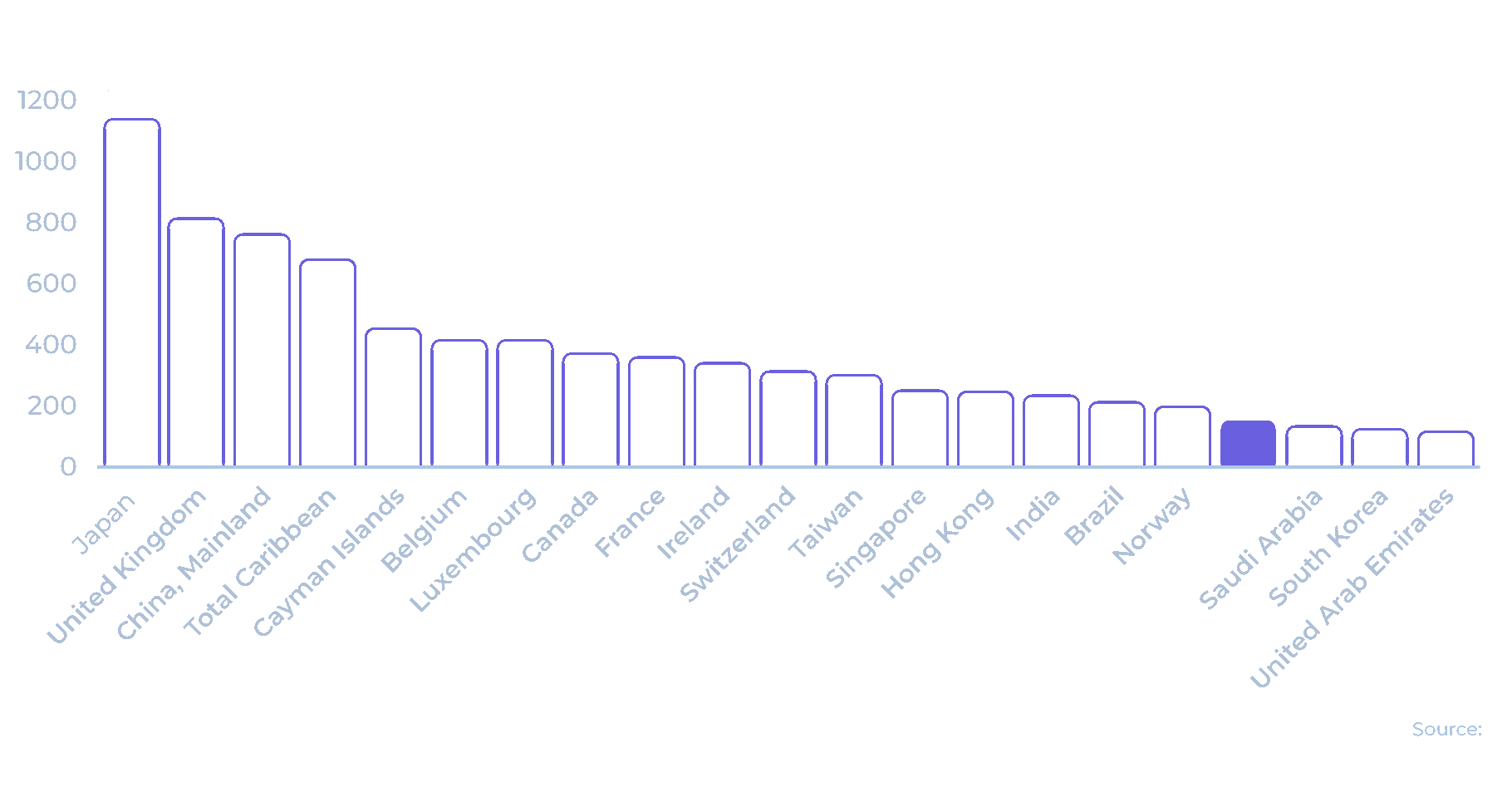
Stablecoin Outlook (July 2025) via Apollo Academy
Enhancing Market Efficiency
The proliferation of on-chain stablecoin liquidity has materially improved market efficiency in the digital asset space. Market efficiency can be observed in how quickly prices reflect available information and how arbitrage opportunities are eliminated. Stablecoins contribute to both by acting as the grease that lubricates trading across venues. Because they hold a steady value, stablecoins significantly reduce frictions when moving capital between exchanges or across blockchain networks. Arbitrageurs can rapidly swap between crypto assets and stablecoins to take advantage of price discrepancies, knowing the stablecoin leg of the trade will not introduce additional volatility. This ability to rebalance and transfer liquidity at will has led to tighter price alignment across exchanges and narrower spreads between buying and selling prices. In effect, stablecoins unify what were once fragmented markets by providing a common, liquid quote currency accepted everywhere in crypto.
A concrete illustration of this dynamic was the USD Coin (USDC) de-pegging incident in March 2023. After a major US bank failure temporarily cast doubt on a portion of USDC’s reserves, USDC traded as low as 87 cents on the dollar during a weekend of panic. However, arbitrage trading firms swiftly mobilised on-chain liquidity to restore the peg. High-frequency traders began swapping tether (USDT) and other stablecoins for discounted USDC on decentralised exchanges, effectively betting that USDC would recover to $1. One wallet famously deployed over $200 million in USDT to buy up cut-price USDC and DAI, earning an estimated $16.5 million profit once USDC’s price normalised. Indeed, by the next Monday, as banking access reopened and Circle, USDC’s issuer, affirmed all redemptions, USDC had rapidly climbed back to its $1.00 peg.
This episode demonstrated the power of on-chain liquidity and arbitrage in correcting mispricings: market participants acting on a clear price discrepancy were able to absorb the selling pressure and drive USDC back to parity within days. The speed of this repegging highlighted a high degree of market efficiency in the stablecoin era. Price deviations were quickly arbitraged away by those with readily deployable stablecoin liquidity, even while traditional financial channels were closed.
More broadly, stablecoins have led to tighter coupling between crypto markets and traditional dollar pricing, enhancing stability. In the early days of crypto, exchanges using different national currencies or isolated liquidity pools often showed significant price divergences for assets like Bitcoin. The wide adoption of USD-pegged stablecoins (such as USDT, USDC, and others) as the dominant base currency has largely erased those arbitrage gaps. A Bitcoin price on an Asian exchange (quoted in USDT) now stays in line with the price on a US exchange (quoted in USDC or USD), because traders can frictionlessly move stablecoin liquidity to capitalise on any spread. Studies have shown that when Tether (USDT) migrated from a relatively closed system (the Omni layer) to more accessible blockchains like Ethereum, arbitrage spreads shrank significantly, implying a more efficient market with stablecoins on open networks. In essence, stablecoins equalise access to dollar liquidity, levelling the playing field between retail participants and institutions and between different geographic markets. With virtually anyone able to hold and transmit a tokenised dollar globally, information and price discrepancies are arbitraged away more quickly.
Stablecoins also contribute to faster settlement and lower transaction costs, which indirectly support market efficiency. Transactions that might take days via traditional banking (especially across borders) can be done in minutes on-chain using stablecoins, reducing the latency in moving funds for trading. Lower fees (especially on newer blockchains with negligible transaction costs) mean even small pricing anomalies can be worth arbitraging, further tightening markets. Additionally, the transparent nature of blockchain allows traders to observe liquidity flows in real time; for instance, large stablecoin movements to or from exchanges can signal impending market activity. This transparency can improve price discovery, as it reduces information asymmetry. Overall, by providing deep, low-friction liquidity and near-instant transferability, stablecoins have pushed crypto markets closer to the efficient ideal where prices reflect available information and adjust quickly to new developments.
Institutional Adoption and the Road Ahead
As stablecoins solidify their central role in on-chain liquidity, they are simultaneously entering the mainstream of finance. What began as a tool for crypto traders has drawn the attention of banks, corporations, and regulators, indicating a broader institutional shift. Major financial institutions are now launching or using their own stablecoins and blockchain-based cash equivalents to harness these efficiency gains. For example, JPMorgan’s JPM Coin (a permissioned bank-issued stablecoin) now reportedly handles over $1 billion in transactions daily, facilitating instantaneous value transfer for corporate clients across borders and time zones. Other banks and fintech firms are following suit: 2023 and 2024 saw launches of stablecoins like PayPal’s PYUSD and pilot programs for digital deposit tokens by banks, signalling that traditional finance recognises the value of 24/7 liquidity and faster settlement that crypto markets have pioneered. This institutional adoption not only lends credibility and scale to stablecoins but also promises to intertwine on-chain liquidity with conventional market infrastructure. We are beginning to see stablecoins used for things like interbank settlements, international remittances, and even as collateral in traditional financial transactions – use cases that could further enhance liquidity and efficiency across the financial system.
Regulators, for their part, are keenly aware of stablecoins’ growing importance and are crafting frameworks to manage the risks without stifling innovation. Authorities around the world have acknowledged that well-regulated stablecoins could become an integral part of the financial plumbing. Jurisdictions such as the European Union have introduced comprehensive stablecoin regulations (e.g. under the MiCA framework) to ensure issuers are transparent and reserves are adequately managed. In the United States, although legislation is still pending, regulators and Congress have debated measures to oversee stablecoin reserves and redemption practices to prevent collapses or runs. These efforts aim to mitigate risks like reserve inadequacy or loss of peg, which could have ripple effects due to stablecoins’ now-systemic role in crypto liquidity. The necessity for such safeguards became evident in high-profile failures like the TerraUSD (UST) collapse in May 2022, where an algorithmic stablecoin’s implosion vaporised tens of billions of dollars in value and triggered a broader crypto market crash. That event served as a cautionary tale: a stablecoin that rapidly loses trust can drain liquidity and spill over into a wider market contagion. It reinforced the point that maintaining confidence in stablecoin stability is crucial not just for stablecoin holders but for the health of crypto markets overall.
Looking ahead, the stablecoin era is likely to continue bridging the gap between decentralised finance and traditional finance. With clearer regulatory guardrails and increasing institutional involvement, stablecoins are poised to become foundational pillars of global market liquidity. They are already deeply embedded in crypto trading and are now starting to support use cases in payments and settlement. If current trends persist, we can expect even greater volumes flowing through on-chain stablecoins, potentially rivalling traditional payment networks in scale. Market participants, from retail traders to large asset managers, will benefit from the resulting efficiency: faster trades, lower costs and seamless movement of capital across markets. At the same time, prudent oversight and risk management will be essential to ensure this new liquidity paradigm remains robust under stress.
In summary, stablecoins have ushered in a new level of liquidity and efficiency in digital markets, earning their place as critical infrastructure in the crypto financial system. By providing a reliable bridge to fiat value and an always-available pool of purchasing power, they have reduced frictions that once hampered crypto market efficiency. Market makers and institutional investors now view major stablecoins as indispensable tools for capital deployment and risk management. As the ecosystem matures, stablecoins, backed by sound regulation and diverse use cases, are set to drive even greater integration between crypto markets and traditional finance. The stablecoin era has only just begun, but it is already redefining how value moves in a decentralised, global marketplace.
Further Reading
-
- CoinDesk: On-Chain Data Reveals How Trading Firms Worked the USDC Stablecoin Repeg
https://www.coindesk.com/business/2023/03/17/on-chain-data-reveals-how-trading-firms-worked-the-usdc-stablecoin-repeg - TIME Magazine: The Real Reasons Behind the Crypto Crash, and What We Can Learn from Terra’s Fall
https://time.com/6177567/terra-ust-crash-crypto
- Ledger Insights: JP Morgan’s JPM Coin Processes $1 Billion Daily
https://www.ledgerinsights.com/jp-morgan-jpm-coin-1billion-daily - Boston Consulting Group: Stablecoins: Five Killer Tests to Gauge Their Potential (May 2025)
https://media-publications.bcg.com/Stablecoins-five-killer-tests-to-gauge-their-potential.pdf - Bank for International Settlements: Stablecoins Could Lead to Better Payments, but Risks Remain (Sept 2025)
https://www.riksbank.se/globalassets/media/rapporter/staff-memo/engelska/2025/stablecoins-could-lead-to-better-payments-but-risks-remain2.pdf - Apollo Global Management: Stablecoin Outlook (July 2025) – commentary referencing BCG & Artemis data
https://www.apolloacademy.com/stablecoin-outlook/
- CoinDesk: On-Chain Data Reveals How Trading Firms Worked the USDC Stablecoin Repeg






































































































Contact Us
We are always open to discussing new ideas. Do reach out if you are an exchange or a project looking for liquidity; an algorithmic trader or a software developer looking to improve the markets with us or just have a great idea you can’t wait to share with us!